 Specs
How to Read a Headphone Spec Sheet
A headphone spec sheet answers five everyday questions if you know where to look: how long it runs, how fast it charges, what it connects to, how it cancels noise and how heavy it is. The headline number is rarely the whole answer; the test condition in the footnote usually is.
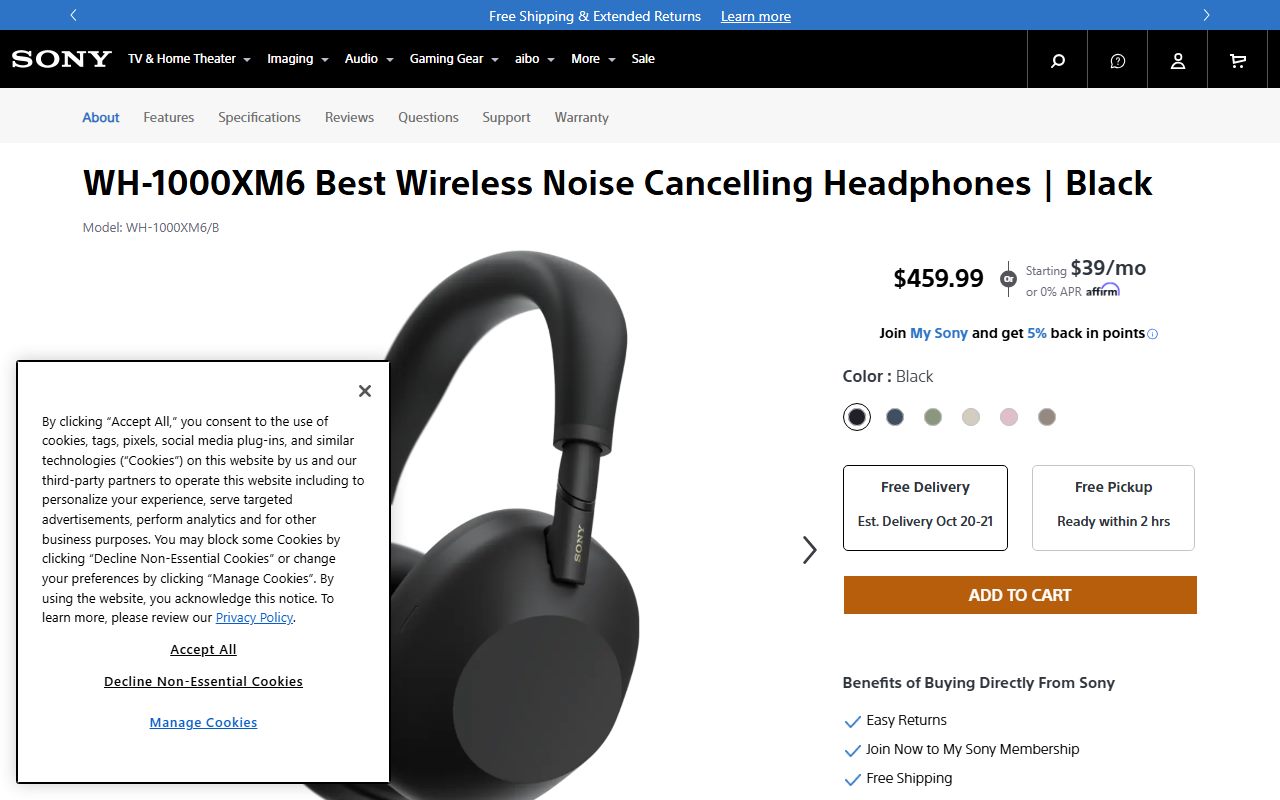
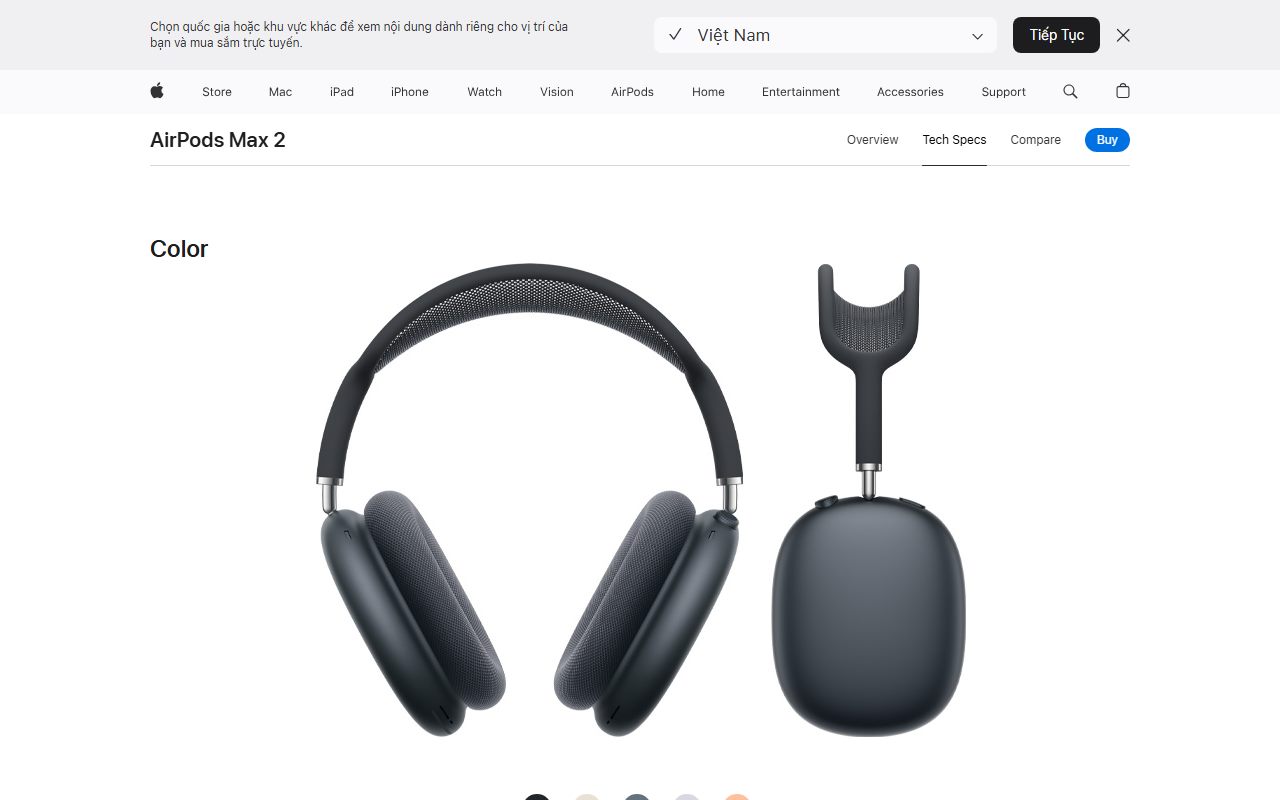
This guide walks through each line using the official pages for the Sony WH-1000XM6, Bose QuietComfort Ultra Headphones (2nd Gen), Apple AirPods Max 2 and Sennheiser MOMENTUM 4 Wireless, all read on October 16, 2026. We did not listen to any of them. We read what the makers wrote and translated it.
Read the battery footnote before the battery number
Every maker publishes an up to figure. The useful part is the condition attached to it. Apple's AirPods Max 2 page says 20 hours at 50 percent volume with ANC on and Spatial Audio fixed. Sony's WH-1000XM6 page says 30 hours with AAC, DSEE Extreme off and EQ off. Sennheiser says 60 hours with an iPhone at mid volume.
Those conditions tell you what will lower the number in your week: higher volume, a higher-bit-rate codec, spatial processing or EQ. Bose's page shows why footnotes matter most: the headline says 30 hours, the footnote says 24 from April 2025 testing of the earlier model. We treated 24 as the cautious figure in our Bose review.
Look for more than one battery line. Sony publishes music and talk time with ANC on and off, four numbers. Apple and Bose publish one or two. A sheet with more lines is a sheet that leaves you fewer surprises.
Translate hours into your own week
Hours on a sheet mean little until they meet a routine. Use one yardstick: a two-hour daily commute, five days a week, is 10 hours.
- 20 hours (Apple): a charge every two weeks on commuting alone; a long-haul flight plus layover can finish it
- 30 hours (Sony, Bose headline): three weeks of commuting; a full working week plus weekend listening on one charge
- 60 hours (Sennheiser): six weeks of commuting; charging becomes a monthly chore
Then discount for your own conditions. If you run LDAC at 990 kbps on the Sony WH-1000XM6, Sony does not publish a separate runtime, so assume less than 30. If you leave Immersive Audio on with Bose, the page itself drops the claim to 23.
Separate the quick-charge claim from its conditions
Quick charge is where the headlines diverge most and the footnotes close the gap. Sony says 3 minutes for 3 hours, but only with the headphones switched off and an optional USB-PD adapter not in the box. Bose says 15 minutes for 3 hours with no condition stated. Apple says 5 minutes for around 1.5 hours from a drained battery.
Sennheiser's page gives two figures: 5 minutes for 4 hours on the spec sheet and 10 minutes for 6 hours in the feature table. Both may be true, but a page that disagrees with itself should make you check the rest of it more carefully, as we did in the Sennheiser review.
Also read the full-charge time and the charging spec. Sennheiser lists 5 V at 800 mA, which is 4 W and works from any phone charger. Sony's headline needs USB Power Delivery. The cheaper claim is often the one you will actually get.
Decode the codec list by the phone in your pocket
A codec is the compression format used over Bluetooth. Four names cover almost every sheet.
- SBC: the mandatory baseline every Bluetooth headphone supports; if a page lists only profiles like A2DP, SBC is implied
- AAC: what iPhones and iPads use; on an Apple device, every pair on this shelf runs AAC regardless of what else is listed
- LDAC and aptX Adaptive: higher-bit-rate options for Android phones that support them; Sony lists LDAC at up to 990 kbps, Sennheiser lists aptX Adaptive
- LC3: the LE Audio codec newer phones are adopting; Sony is the only one of the four to list it
The practical rule: if you use an iPhone, skip the codec line entirely. If you use Android, check your phone's own spec sheet for LDAC or aptX Adaptive before paying for a headphone that has it. Our Sony vs Bose comparison shows how the codec gap vanishes on an iPhone.
Treat the Bluetooth version as a tiebreaker, not a headline
Bose lists 5.4, Sony and Apple 5.3, Sennheiser 5.2. The version number tells you the radio generation. It does not tell you range in your house, which depends on the class and the building, or audio quality, which depends on the codec.
What to look for instead: the profile list. Sony's page lists TMAP, CSIP, MCP and other LE Audio profiles alongside the classic A2DP, AVRCP and HFP. That is the sign a headphone is ready for broadcast audio in venues. A plain A2DP, AVRCP, HFP list, as on Bose and Sennheiser, is classic Bluetooth only.
Look for the word multipoint, not a description of switching
Multipoint means two devices connected at the same time, so a call on the phone interrupts music from the laptop. It is the single most useful everyday feature for hybrid workers, and makers describe it in very different words.
Sony's specification page lists Multipoint Connection: Yes. Bose's page says you can cycle through paired devices, which describes switching, not simultaneous connection. Sennheiser's page does not mention it. Apple's specs page lists neither multipoint nor Automatic Switching, because Apple handles switching through the Apple ID across its own devices.
Our rule is to grade only what is written. A headphone may support multipoint in firmware, but if the page does not say so, a buyer cannot rely on it, and neither do we. The everyday buying guide ranks the four partly on this line.
Accept that the ANC section describes a mechanism, not a result
No consumer headphone maker publishes a decibel figure for noise reduction. What the sheets give you is the machinery: Sony lists 12 microphones and a QN3 processor; Apple lists nine microphones, eight for ANC, and H2 chips; Sennheiser lists hybrid ANC with four microphones; Bose names ActiveSense without a count.
Microphone count is not a performance measure. It is simply the only comparable number any of the pages offer. Apple is the one maker to cite a standard, IEC 60268-24, and only to claim 1.5x more cancellation than its own original AirPods Max.
So when a page, including ours, says which pair is quieter on a plane, ask what it measured. If the answer is nothing, it is an opinion. Ours is explained on the method page.
Convert the weight yourself and note what is missing
Makers mix units. Apple gives 386.2 g. Bose gives 0.583 lb. Sony gives approx. 8.96 oz. Sennheiser gives no figure at all, only carry case dimensions. Convert everything to grams: Bose about 264 g, Sony about 254 g, both by our arithmetic, which puts them within the rounding of the originals.
A missing weight is information. If a maker calls a design lightweight twice and never prints a number, treat weight as unknown rather than light. The same applies to driver size, which Sony gives as 1.18 in, Sennheiser as 42 mm, and Apple and Bose not at all.
Find the warranty on the page, not in the box
Bose states a one-year limited warranty on the product page and prices extensions beside it. Sennheiser states one year on the product page. Apple states one year on its support site rather than the specs page. Sony's store page has a Warranty tab whose contents did not render for us, and its support warranty article did not render either.
If the term is not readable before checkout, that is a gap worth asking the retailer about. A warranty card in the box is not the same as a term you can read before paying.
Bottom line
Read the footnote under the battery number. Convert the weight to one unit. Look for the word multipoint, not a paraphrase. Match the codec list to your phone, not to the marketing. Treat the ANC section as a description, not a ranking. And find the warranty term before you pay, not after.
Done in that order, a spec sheet takes ten minutes to read and answers most of what a review can tell you without a lab. Where the sheet is silent, our reviews say so, and the AirPods Max 2 review shows how even the most precise sheet still leaves lines blank.
Sources
- Sony support, WH-1000XM6 specifications - checked October 16, 2026
- Sony US store, WH-1000XM6 product page - checked October 16, 2026
- bose.com, QuietComfort Ultra Headphones (2nd Gen) product page - checked October 16, 2026
- apple.com, AirPods Max 2 tech specs - checked October 16, 2026
- Apple Support, AirPods repair and service (warranty term) - checked October 16, 2026
- us.sennheiser-hearing.com, MOMENTUM 4 Wireless product page - checked October 16, 2026