 Specs
ANC, transparency and codecs explained for the train

An earbud spec sheet is written for a shop shelf, not for a 7:45 train. It says 2x more noise cancelled, Adaptive Transparency, LDAC, IPX4, up to 8 hours. None of those lines tells you whether you will hear the platform announcement or whether the case will survive a wet bag. This note translates the common lines using figures from apple.com, Sony, Samsung, Bose, Qualcomm and the Bluetooth SIG, all read on October 16, 2026. It is a reading guide, not a listening test.
Read noise-cancelling claims as comparisons, not measurements
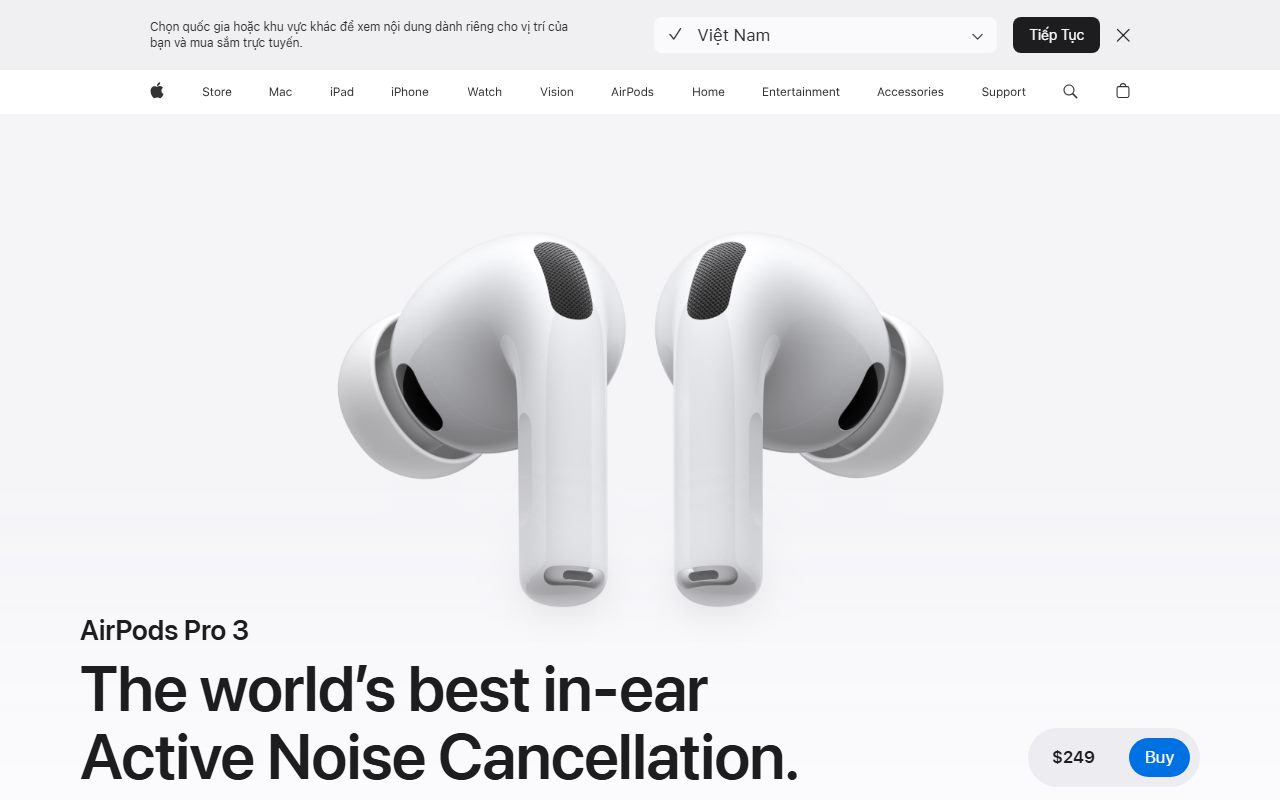
No consumer earbud sheet we read publishes attenuation in decibels. Apple says AirPods Pro 3 cancels up to 2x more noise than AirPods Pro 2. Sony says the WF-1000XM5 is best in class per its own research as of April 10, 2023. Samsung says Adaptive ANC 2.0 processes in real time. Bose describes microphones inside and outside the earbud producing an opposing signal.
Each of those is true as written and none can be ranked against another. The useful question on a train is not which number is bigger but what the mode does: full cancelling for the carriage, a transparency mode for the platform, and whether the earbud switches between them itself.
Passive isolation does the other half of the job. A tip that seals blocks noise before any chip is involved. Apple ships five sizes including XXS with a foam layer; Sony ships noise-isolating tips; Bose adds a stability band. Trying every size is the cheapest upgrade on this page.
Transparency, Aware, Ambient: the same idea with different footnotes
Transparency mode uses the outside microphones to pass surroundings through the earbud. Apple's support page puts it plainly: in Transparency mode you can still hear the world around you. Sony calls it Ambient Sound; Bose calls it Aware.
The footnotes are where they differ. Apple lists Loud Sound Reduction, which trims sudden loud noise in Transparency and Adaptive Audio, and Conversation Awareness, which lowers your media when you start speaking. Bose lists ActiveSense inside Aware mode, which listens for very loud environmental sounds and responds. Sony lists Quick Attention, where covering an earbud lets sound in, and Speak-to-Chat, which pauses music when you talk.
Adaptive modes blend the two. Apple's Adaptive Audio moves between cancelling and Transparency by surroundings; Samsung's Adaptive Noise Control does the same and is off by default. On a commute that means the earbud, not you, decides when the announcement comes through. Whether that is a feature or an annoyance is personal, and every one of these can be switched off.
Codecs: what SBC, AAC, LDAC, aptX and LC3 mean on a moving train
A codec is how the phone compresses audio before sending it over Bluetooth. Every earbud supports SBC. iPhones use AAC. Beyond that, the sheets diverge, and the names matter less than two properties: the bitrate, and what happens when the link gets weak.
- SBC is the baseline. Sony's LDAC page uses 328 kbps SBC as its comparison point.
- AAC is what Apple devices use. Apple does not list codecs on the AirPods Pro 3 specs page; the only mention is 256 kbps AAC as the format of its battery test tracks.
- LDAC is Sony's codec, carried by the WF-1000XM5 and many Android phones. Sony's page says best-effort mode steps between 330, 660 and 990 kbps, and calls 990 kbps about three times the data of SBC.
- aptX Adaptive is Qualcomm's. Its page lists typically 279 to 420 kbps, about 80 ms system latency, and dynamic bitrate adaptation for challenging RF environments. Neither Apple, Sony, Samsung nor Bose lists it on the earbuds in our group; EarFun does.
- SSC-UHQ is Samsung's, at 24-bit/96 kHz on the Galaxy Buds4 Pro, and needs a Galaxy phone on One UI 6.1.1 or later.
- LC3 is the LE Audio codec. The Bluetooth SIG says LC3 improves quality over SBC even at a 50 percent lower bit rate, and it underpins Auracast broadcast audio and hearing aid support. Sony and Samsung list it; Apple and Bose do not.
On a crowded train the second property wins. A codec that steps down cleanly when the carriage fills with phones keeps playing; one that holds a high bitrate stutters. Sony's best-effort LDAC mode and Qualcomm's adaptive bitrate are both designed for exactly that, by their makers' description. The 990 kbps figure is for a quiet room with a strong link.
A practical rule: for podcasts and calls, the codec does not matter. For music on Android, LDAC or aptX Adaptive is a real line on the sheet. On an iPhone, every earbud on our earbuds page runs AAC, whatever else it lists.
IP codes: two digits, and ask about the case
An IP rating has two positions. The first digit is dust, 5 meaning dust-protected and 6 dust-tight; the second is water, 4 meaning splashes from any direction and 7 meaning brief immersion. An X means the maker makes no claim for that position.
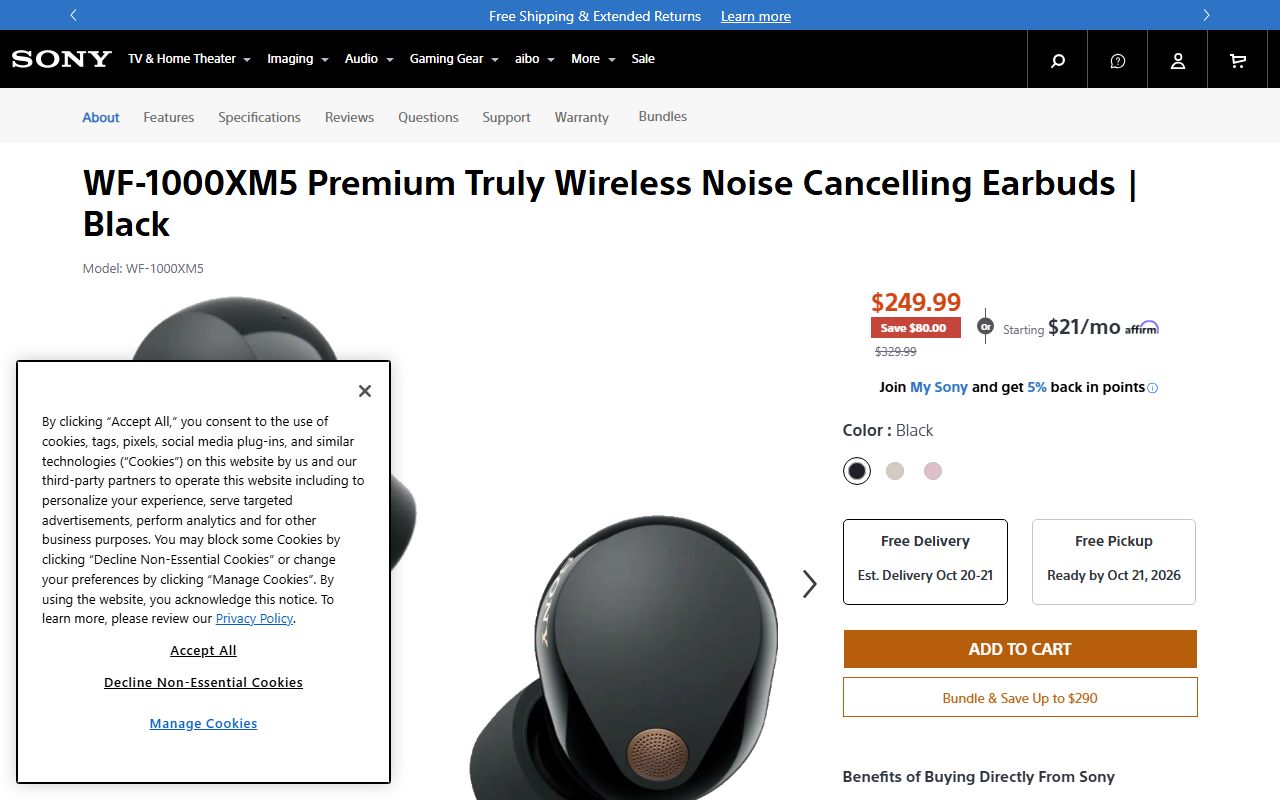
So IP57 on the AirPods Pro 3 and Galaxy Buds4 Pro earbuds means dust-protected and immersion-rated; Samsung defines it as 3 feet of fresh water for 30 minutes in lab conditions. IPX4 on the Sony WF-1000XM5 and Bose QuietComfort Ultra Earbuds (2nd Gen) means splash-resistant with no dust claim.
Then ask about the case, because the sheet usually goes quiet. Apple rates its case IP57. Sony states its case is not water resistant. Samsung's FAQ says only the earbuds are rated. Bose lists IPX4 for the earbuds and nothing for the case. On a wet platform the case is what hits the ground.
Battery lines: find the state, the footnote and the quick charge
Up to 8 hours means nothing until you know the state. Apple's 8 hours is with ANC on; its footnotes drop to 7.5 with head-tracked spatial audio and 6.5 with heart rate sensing. Sony publishes 8 with NC on and 12 off, plus talk times of 6 and 7. Samsung publishes 6 and 7. Bose publishes 6 with Immersive Audio off and 4 with it on.
The footnote tells you how the number was made. Bose's is the most detailed: February 2025, 75 dB playback, flat EQ, Quiet Mode. Apple's says preproduction units and that results vary. Sony's says batteries are consumable and lifespan is not guaranteed. A footnoted number is more trustworthy than a bare one, not less.
The quick-charge line is the commuter's line. Apple: 5 minutes for about 1 hour. Sony: about 3 minutes for roughly 1 hour. Bose: 20 minutes for up to 2 hours. Samsung publishes none on the pages we read. Our AirPods Pro 3 vs WF-1000XM5 comparison puts the two 8-hour sheets side by side.
Multipoint and switching: the row that decides laptop-plus-phone days
Multipoint means the earbud holds two connections at once and switches when one plays. Sony lists two devices of any brand. Bose lists multipoint without a count. Apple and Samsung list automatic switching between their own devices on one account, which is excellent inside the ecosystem and absent outside it.
If your commute ends at a Windows laptop and your phone is an iPhone, read this row before any other. Our best earbuds for commuting and calls guide weights it accordingly.
Bottom line
Read a noise-cancelling claim as a comparison, not a score. Read a transparency mode by its footnotes: loud-sound limiting, conversation detection, automatic switching. Read a codec for how it behaves when the link is weak, not for its peak number. Read an IP code as two digits and then ask about the case. Read a battery line for its state, its footnote and its quick charge.
None of that requires a lab. It requires the maker's own page and ten minutes, which is what every review on this site is built from.
Frequently asked
- Does LDAC make a difference on a train? Sony's own page describes a best-effort mode that drops from 990 to 660 or 330 kbps when the link weakens, so the peak figure is for a quiet room. For podcasts and calls the codec is irrelevant.
- Is IPX4 enough for commuting? For rain on the earbuds, by the makers' definitions, yes. The X means no dust claim, and in our group the only rated case is Apple's; the other three cases are unrated or stated not water resistant.
- What is the difference between transparency and adaptive modes? Transparency passes outside sound through at a set level. Adaptive modes, Apple's Adaptive Audio and Samsung's Adaptive Noise Control, move between cancelling and transparency by surroundings, and can be turned off.
Sources
- Apple, AirPods Pro 3 tech specs - checked October 16, 2026
- Apple Support, Transparency mode, Loud Sound Reduction and Conversation Boost - checked October 16, 2026
- Sony Support, WF-1000XM5 specifications - checked October 16, 2026
- Sony, LDAC technology page - checked October 16, 2026
- Qualcomm, aptX Adaptive - checked October 16, 2026
- Bluetooth SIG, LE Audio and the LC3 codec - checked October 16, 2026
- Samsung US, Galaxy Buds4 Pro product page and FAQ - checked October 16, 2026
- Bose, QuietComfort Ultra Earbuds (2nd Gen) product page - checked October 16, 2026